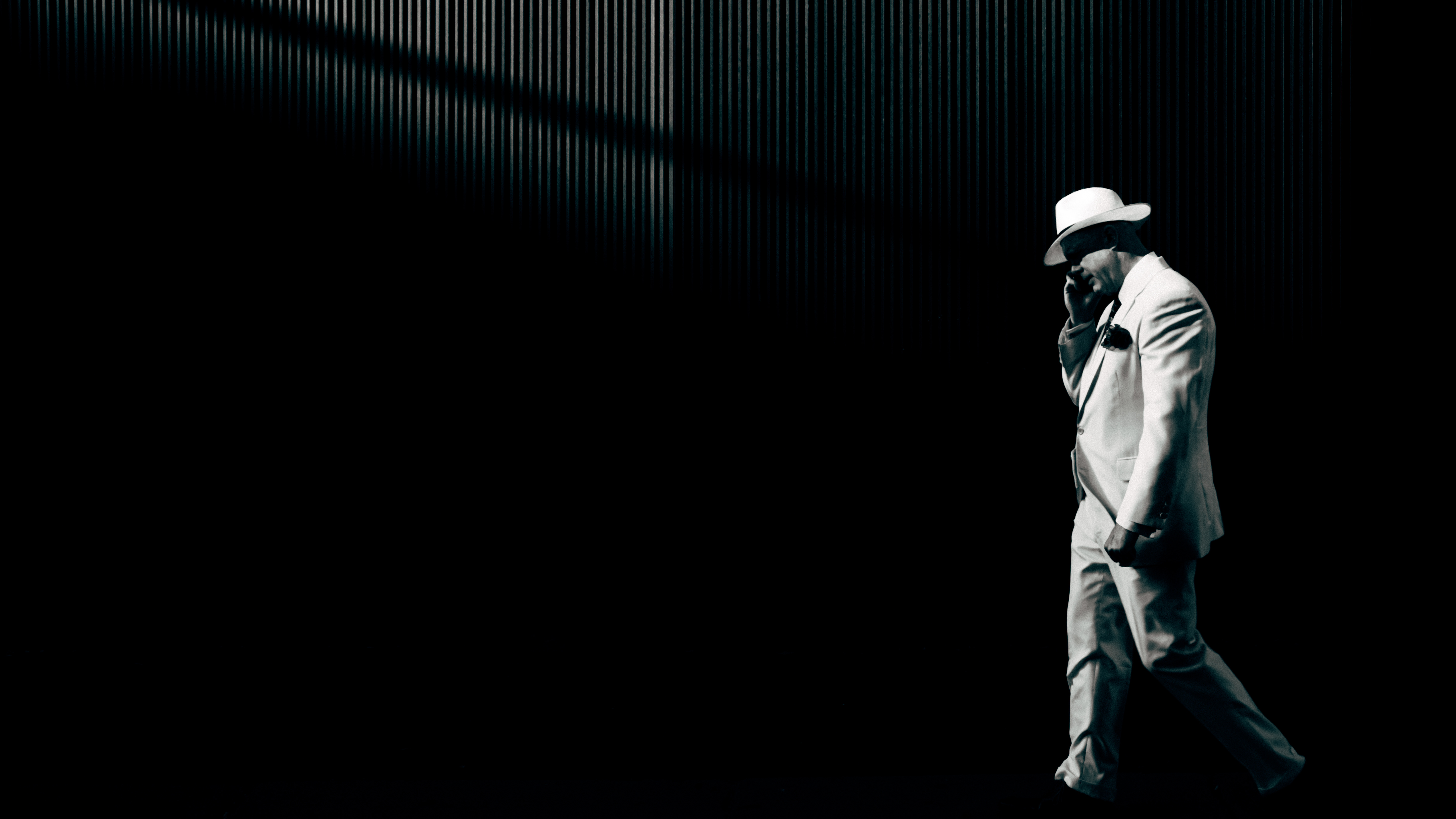
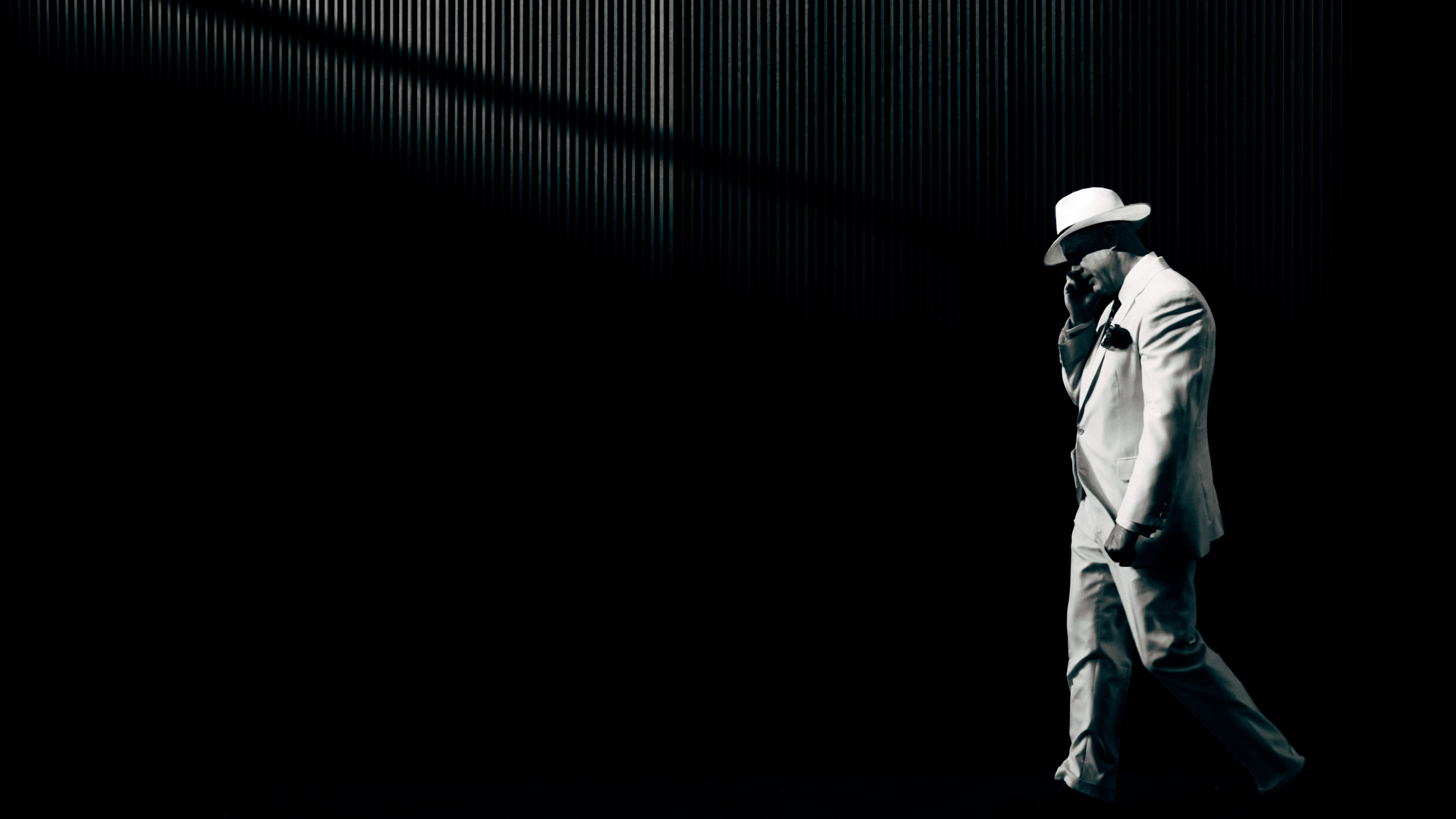
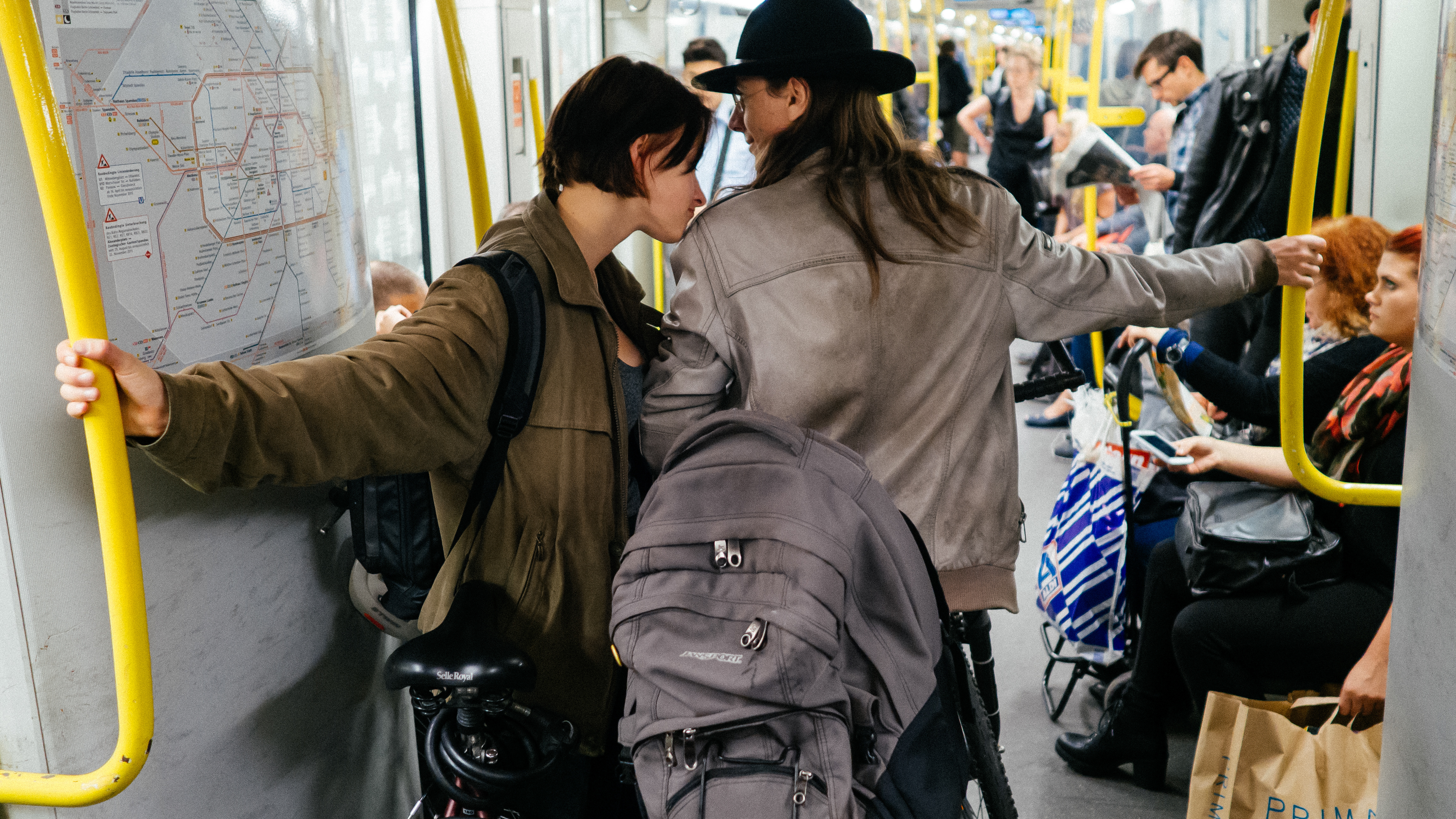
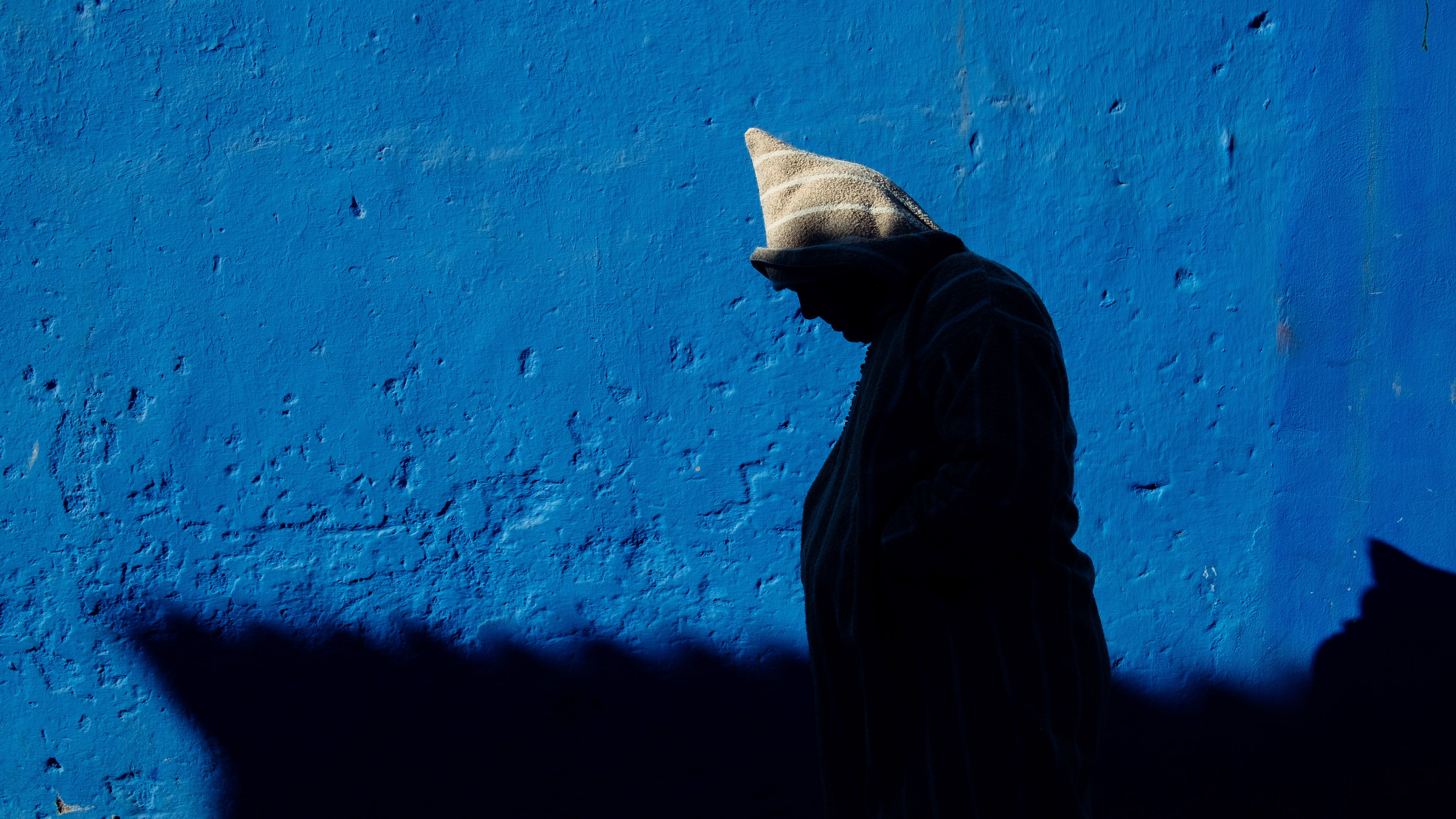
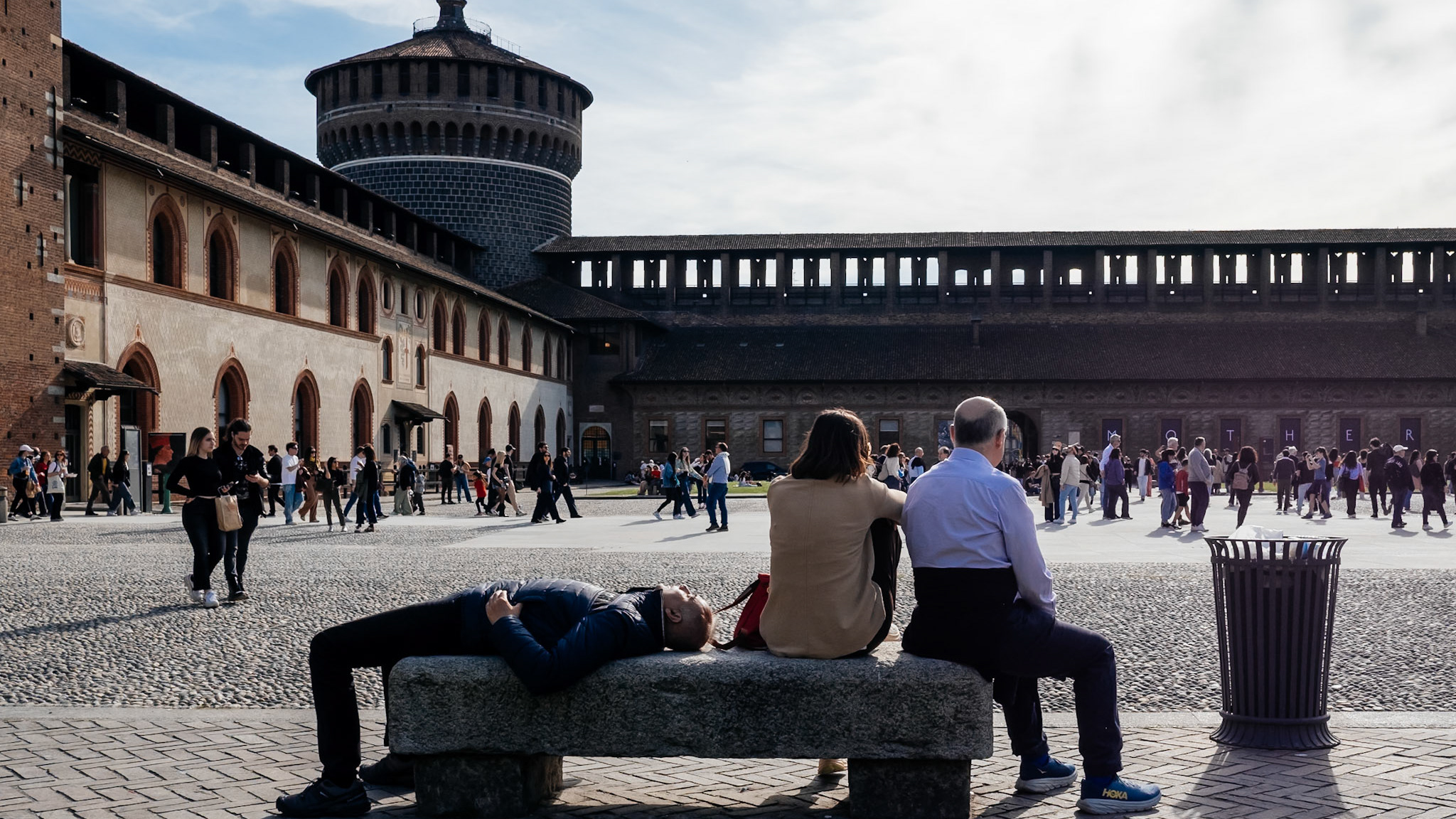
Perfectly staged does not always mean more meaningful
A photograph can be technically flawless and still tell you very little.
The light can be beautiful. The composition can be balanced. The subject can be perfectly positioned. The expression can be exactly what the photographer asked for. Nothing is wrong with the picture.
And yet, sometimes, there is not much left to discover.
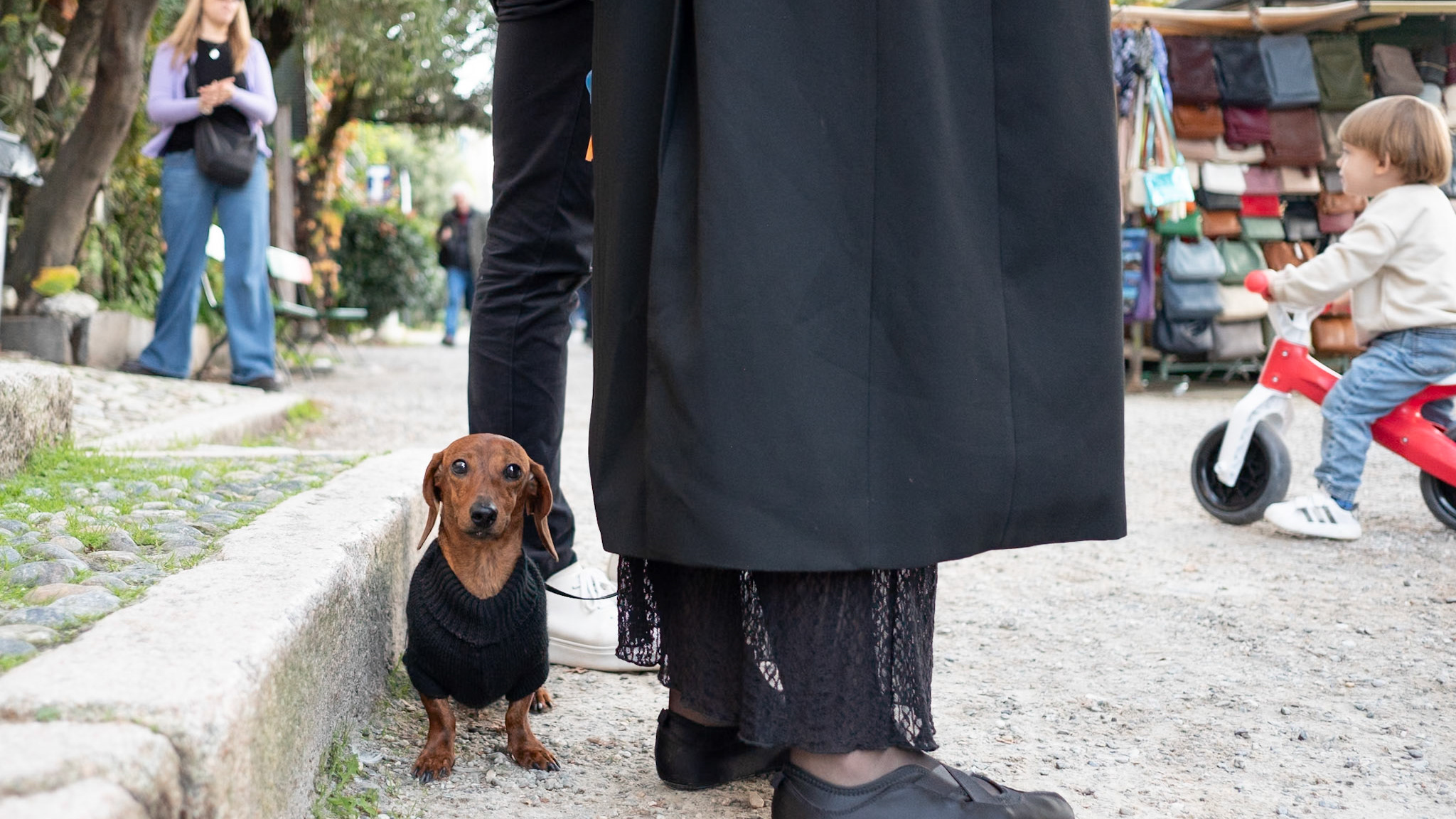
This is one reason candid photography can be so compelling. When people are not completely directing their behavior for the camera, small things begin to appear that are difficult to design in advance: a hesitation before someone speaks, a hand reaching toward another person, two people walking at slightly different speeds, an unexpected glance, an awkward posture, a moment of distance.
These details may look insignificant when they happen. Inside a photograph, they can become information.
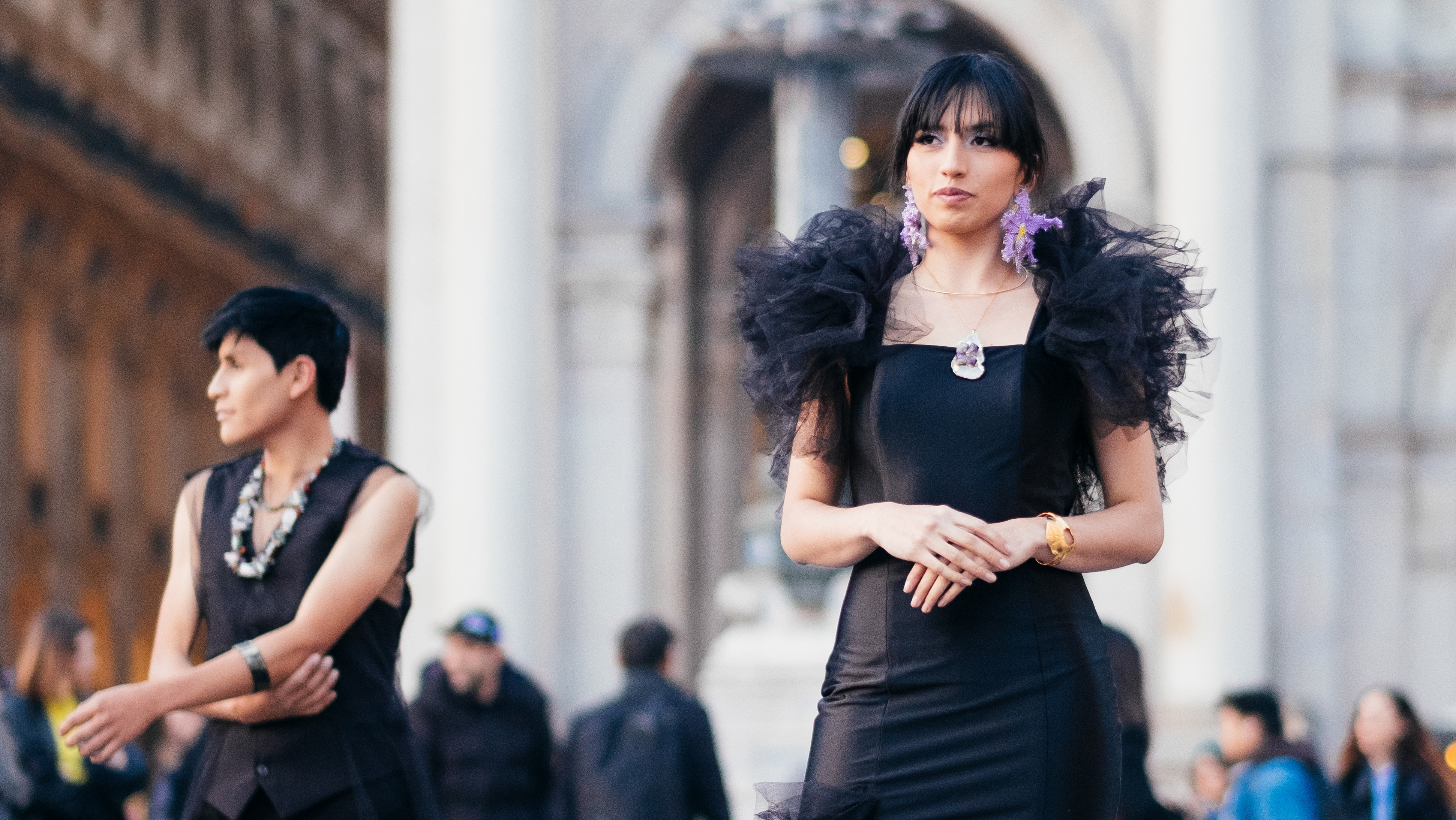
This does not mean staged photography is inferior. Staging gives the photographer an extraordinary degree of control. Light, clothing, background, pose, expression, and composition can all be shaped deliberately. For many kinds of photography, that control is exactly the point.
The difference is what the photograph is trying to communicate.
If the objective is appearance, control can be extremely useful.
If the objective is lived experience, too much control can sometimes remove the very behavior that makes the experience interesting.
That is where candid photography becomes more than simply taking photographs without asking people to pose.
What is candid photography actually giving you?
The simplest candid photography meaning is photography made without directing the subject's behavior specifically for the photograph.
But that definition is incomplete.
The important difference is not simply whether somebody knew a camera was present. It is whether the photographer is observing behavior or manufacturing it.
Consider a couple walking through Milan.
You can stop them under a beautiful archway, arrange their positions, ask them to look at each other, adjust their clothes and wait for the right expression. The resulting photograph may be excellent.
You can also walk with them and photograph what happens while they are actually moving through the city.
One person walks slightly ahead. The other reaches for their hand. They stop at a crossing. One looks at a shop window while the other continues looking forward. They laugh at something the photographer does not hear.
The second approach introduces uncertainty.
But uncertainty is not necessarily a problem.
It gives the viewer something to read.
Candid images can contain:
-gesture
-hesitation
-body language
-physical distance
-interaction
-environmental context
-unexpected interruptions
-imperfect expressions
-relationships between people
-moments immediately before or after an obvious event
None of these automatically makes a photograph good.
They simply give the photograph more material to work with.
A person's hand can tell you something about a relationship. The distance between two people can change the meaning of a scene. A passerby entering the background can introduce tension or humor. A person's position within an environment can tell you something that a clean portrait cannot.
The narrative is not necessarily in the face.
It can be in the relationship between the person and everything around them.
Candid does not mean accidental
One of the most useful misconceptions to remove is that candid photography means simply pointing a camera at whatever happens.
It does not.
A strong candid photograph can be extremely intentional.
The photographer still decides where to stand.
They decide how close to get. They choose the background. They notice the light. They decide whether to wait. They anticipate movement. They choose when to release the shutter. They decide what belongs inside the frame and what should remain outside it.
The spontaneity belongs to the situation.
The intention belongs to the photographer.
This distinction matters enormously in street photography.
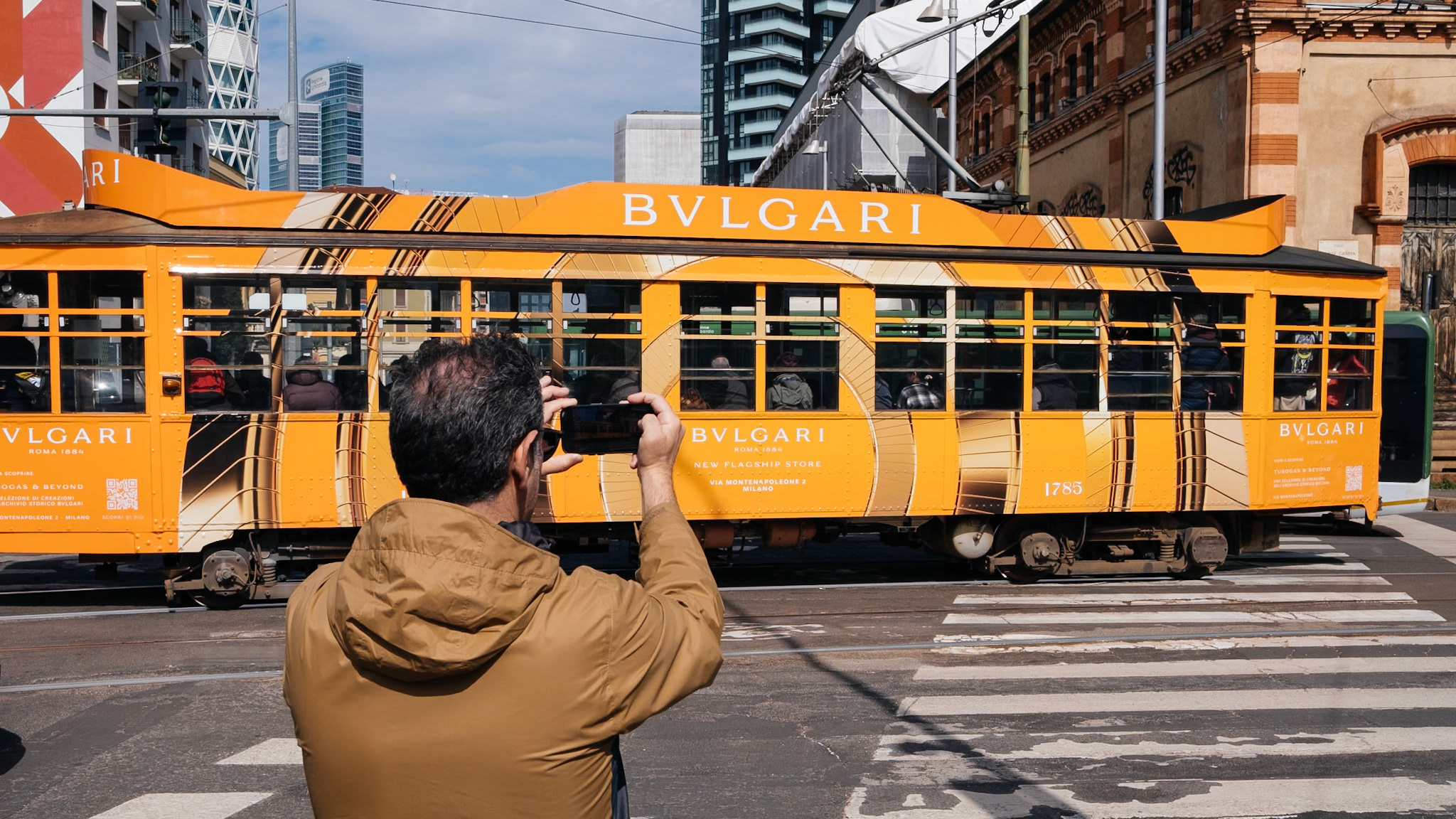
Imagine standing beside a tram stop in Milan in late afternoon. The light is falling across the pavement and the tram creates a clean vertical structure in the background.
You could photograph the first person who walks past.
Or you could recognize that the location has potential, build the frame, and wait.
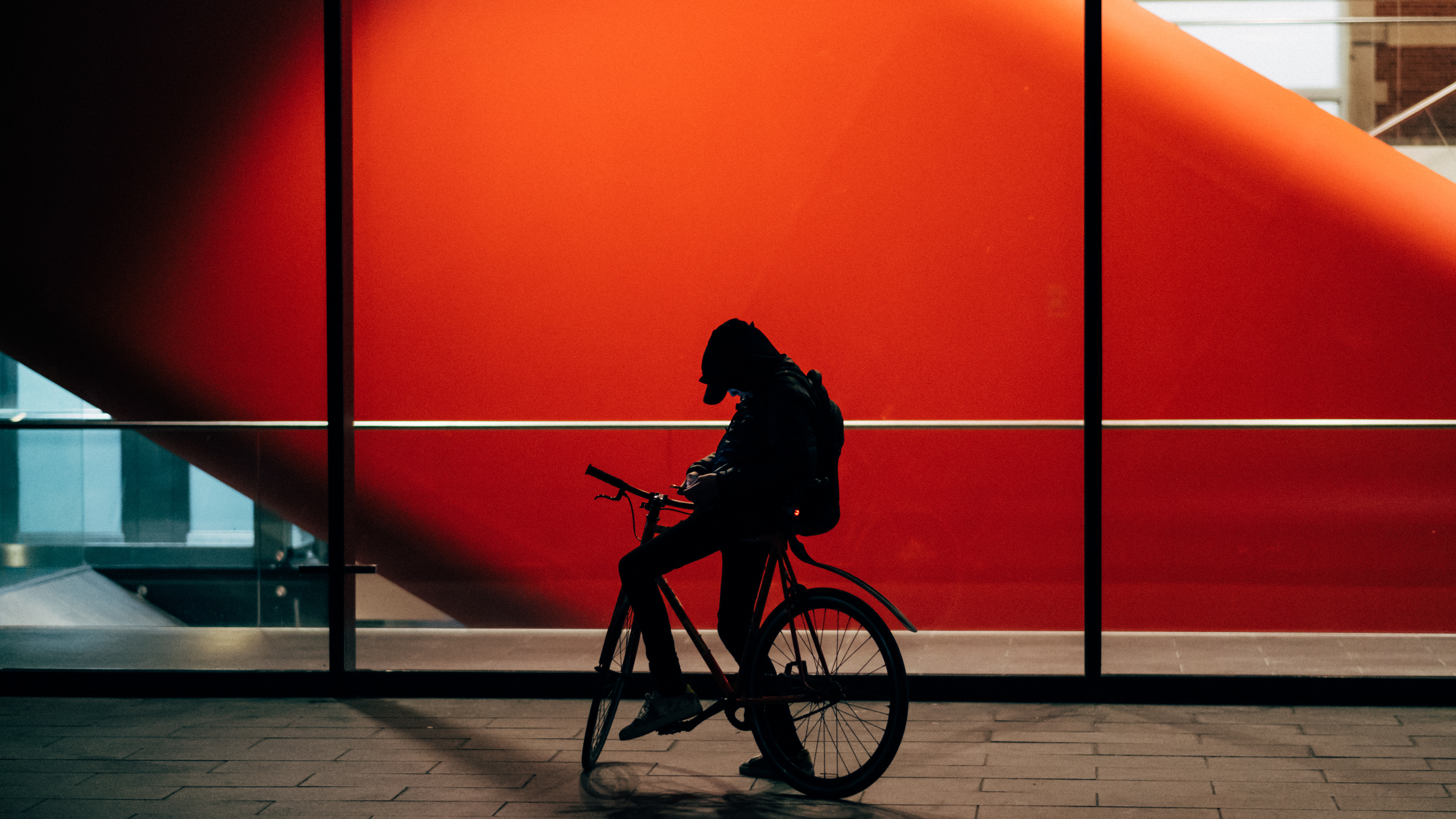
Perhaps a person with a long coat enters from the left. Another person crosses behind them. A cyclist interrupts the space. The tram arrives at exactly the wrong moment, creating a reflection in the glass.
You did not create those elements.
But you were ready for them.
That is not random photography. It is observation combined with anticipation.
Why real interaction often carries more narrative
A posed portrait usually tells us about a person.
An observed interaction can tell us about a relationship.
That difference is important.
When photographing people naturally, pay attention to what happens between them rather than only what happens to them.
A couple sitting at a café may look perfectly comfortable when asked to smile. But the moment one person starts telling a story and the other leans forward to listen can reveal more about their relationship than the requested smile.
Two friends walking together may produce a stronger photograph when one interrupts the other with a gesture than when both stop and look toward the camera.
A parent adjusting a child's coat can communicate care without either person needing to perform it.
A traveler looking at a map while another person waits can say something about the experience of being somewhere unfamiliar.
These are small events.
Photography becomes interesting when you learn to recognize their visual structure.
Look at the hands.
Look at the distance between bodies.
Look at where people are looking.
Look at whether their movements agree or conflict.
Look at the space around them.
The photograph may become more informative because the people are doing something rather than simply presenting themselves.
Candid vs posed photography: two different kinds of control
The difference between candid and posed photography is easiest to understand as a difference in control.
In a staged photograph, the photographer has more control over what happens. The position of the subject, the expression, the light, the background and the timing can all be deliberately shaped. The result is usually more predictable because the photographer has designed much of what the viewer will see.
Candid photography works differently. The photographer gives up some of that control and accepts more uncertainty. The expression may not be perfect. Someone may enter the background. Two people may move in unexpected directions. The composition may change from one second to the next.
But that uncertainty is also where some of the narrative can come from.
Instead of designing the expression, the photographer observes it. Instead of arranging the interaction, the photographer waits for it. Instead of constructing the context, the photographer often works with the environment that is already there.
This also changes the way composition is approached. In staged photography, composition can be designed first and then filled with the subject. In candid photography, the photographer often has to discover the composition while the situation is unfolding.
Timing works in a similar way. A staged photograph can be taken when everything is ready. A candid photograph often depends on anticipating when several elements will briefly align.
Neither approach is inherently better. They simply place control in different parts of the photographic process.
The important question is what you want the photograph to communicate.
If you need a precise visual idea, staging can give you the control to construct it. If you want the photograph to communicate something about how people actually behave, interact or occupy a place, candid photography gives the situation more room to contribute.
That is why the distinction is not really between "perfect" and "imperfect" photography.
It is between creating the conditions for an image and controlling everything that happens inside it.
This is not a competition.
A staged photograph can communicate an idea with extraordinary precision. If you need a specific composition, expression or visual message, directing the scene may be the most appropriate approach.
Candid photography simply operates differently.
Instead of deciding exactly what should happen, you create the conditions in which something can happen and remain alert enough to recognize it.
That can be particularly valuable when photographing relationships, travel experiences, family life, documentary situations, and street scenes.
The difference is not quality.
It is where the information comes from.
In a staged photograph, much of the information is supplied by the photographer.
In a candid photograph, some of it is supplied by the situation itself.
The street photographer's advantage: you cannot control the scene
Street photography makes this distinction especially clear because the photographer has limited control over the subject.
You cannot tell a stranger exactly when to walk into a patch of light.
You cannot ask two unrelated people to cross paths at the right moment.
You cannot predict when someone in the background will turn their head.
You cannot arrange the shadow, the tram, the cyclist, the reflection and the gesture with complete precision.
So the craft shifts.
You are no longer primarily creating the moment.
You are recognizing it.
This is why anticipation matters so much in candid street photography.
A street photographer learns to read a space before taking the photograph.
Where are people coming from?
Where will they probably move?
Where is the strongest light?
What lines or shapes are already present?
What happens if somebody enters from the other side?
What is likely to change in the next few seconds?
You build the frame before the subject arrives.
Then you wait.
This is one of the quiet disciplines of street photography. The camera is not necessarily doing the work. Your attention is.
In Milan, this can happen almost anywhere. Under the arcades, at a tram stop, beside a pedestrian crossing, outside a café, on a quiet residential street, or in the changing flow around a station.
The city supplies the structure.
People interrupt it.
The photograph happens when those two things meet.
When imperfection makes the photograph stronger
Photographers are trained to remove problems.
Straighten the horizon.
Clean the background.
Wait for the perfect expression.
Avoid awkward gestures.
Make sure nobody is partially cut off.
Keep the composition clean.
All of these instincts have value.
But there is a point where technical correction becomes narrative reduction.
An unusual gesture may tell you more than a conventional pose.
A partially obscured face may make you pay attention to body language.
A person looking away may create more tension than someone looking directly at the camera.
A messy environment may tell you where the person actually is.
An imperfect frame may preserve the uncertainty of what was happening.
This does not mean every technically imperfect photograph should be kept.
It means imperfection should not be rejected automatically.
Ask a different question when editing:
What does this imperfection contribute?
If the answer is nothing, remove the photograph.
If it contributes tension, context, movement, intimacy or ambiguity, it may deserve another look.
Good editing is not simply identifying the cleanest frames.
It is deciding which frames contribute something to the larger body of work.
How to photograph people more naturally
If your photographs of people often feel too posed, the solution is not necessarily to become more candid overnight.
Start by changing what you ask yourself while photographing.
Stop directing every moment
Not every photograph needs instructions.
Instead of constantly asking someone to smile, turn their head or look at the camera, give them an activity.
Walk together.
Talk.
Look around.
Make coffee.
Read something.
Move through a place.
The activity gives the body something to do, which often makes expressions and gestures more natural.
Photograph the interaction, not just the person
When two people are involved, resist the instinct to photograph each person separately.
Watch what happens between them.
A hand on a shoulder, a change in distance, a shared glance or a moment of interruption can carry more information than two individual portraits.
Watch before shooting
Spend a little time observing before raising the camera.
Notice how someone moves.
Notice what they do when they are comfortable.
Notice how they interact with other people.
This is especially useful in street photography. If you photograph immediately, you often record the surface of the situation. If you wait, patterns begin to appear.
Look before and after the obvious moment
The obvious moment is not always the strongest one.
Someone finishes laughing.
A couple stops walking.
A person puts their phone away.
A group begins to leave.
A child turns back after running ahead.
The event may already be ending, but the photograph may just be beginning.
Build the frame first
Find interesting light, architecture, geometry or background structure.
Then wait for the human element.
This reverses the common beginner approach of following a person around looking for a background later.
Sometimes the environment is the composition and the person is the final element.
Leave some imperfection
Do not discard a photograph simply because someone is slightly obscured or a gesture looks unusual.
First ask whether the imperfection adds information.
The frame does not need to be clean if the photograph is clear.
Give people room to forget the camera
In personal photography, this can be particularly important.
Once people have spent several minutes being photographed, the camera can become less interesting. Their attention moves back toward the activity.
That is often when natural expressions return.
The goal is not to trick people into forgetting they are being photographed.
It is to create enough comfort that they no longer feel the need to perform.
Is candid photography more authentic?
Not automatically.
This is one of the most important distinctions in the entire subject.
Candidness, authenticity, spontaneity, truth and privacy are related ideas, but they are not interchangeable.
A candid photograph can be misleading.
It can capture a facial expression without the context that explains it. It can make an ordinary situation look dramatic. It can intrude on somebody at a vulnerable moment.
Conversely, a person who knows they are being photographed can still produce a truthful photograph.
Someone can consciously participate in a portrait and still look completely like themselves.
In fact, some of the most natural photographs come from a mixture of direction and freedom.
A photographer might choose the location and light, give a couple something to do, then stop directing them.
The photographer has constructed the conditions.
The people create the interaction.
This is often a more useful way to think about candid photography.
The goal is not to eliminate the photographer's influence.
It is to avoid manufacturing every emotional detail.
Candid photography still requires judgment
Photographing people naturally does not give the photographer unlimited permission.
Public space is not a place where human dignity disappears.
There is a difference between observing someone and extracting an image from their discomfort.
Pay attention to context.
Someone waiting for a tram is one thing. Someone experiencing a private or vulnerable situation in a public place is another.
Proximity matters too. Photographing from a distance and photographing someone from very close range can create completely different relationships between photographer and subject.
So can intention.
Ask yourself why you want the photograph.
Is the situation visually interesting?
Does the person contribute to a larger observation about the environment?
Are you documenting an interaction?
Or are you simply attracted to someone's vulnerability?
That question can change whether you raise the camera.
If someone objects, judgment matters more than winning an argument. Sometimes the right response is simply to lower the camera and move on.
Street photography is an observational practice, but observation carries responsibility.
The fact that something can be photographed does not automatically mean it should be.
From street photography to personal photography
The same principle applies far beyond the street.
In documentary photography, observed behavior can reveal context that a portrait alone cannot.
In travel photography, a person naturally interacting with a place can communicate more about the experience than a carefully posed photograph in front of a landmark.
In family photography, children often become more expressive when they are doing something rather than being asked to smile.
In couples photography, walking, talking or exploring a place can create interactions that feel more personal than a sequence of formal poses.
In proposal photography and intimate ceremonies, the photographer's role is often to anticipate rather than direct. The important photograph may happen in the seconds before the proposal, in the reaction immediately afterward, or in the quiet interaction that follows.
Even environmental portraiture can benefit from this approach.
Direction is not the enemy of natural photography.
Good direction can create the conditions for natural behavior.
The photographer might choose the place, the light and the general activity, while leaving enough freedom for the subject to behave rather than perform.
That is the middle ground worth pursuing.
The strongest photographs often sit between control and chance
There is a temptation to divide photography into two camps.
Staged photographs are controlled.
Candid photographs are spontaneous.
But real photographic practice is rarely that simple.
A street photographer may spend ten minutes choosing a position before a completely unpredictable event occurs.
A portrait photographer may carefully choose the environment, then wait for a genuine expression.
A couples photographer may guide two people into a location, then stop directing and allow them to interact.
A travel photographer may anticipate a particular relationship between architecture, light and movement without knowing exactly who will enter the frame.
In each case, the photographer creates conditions.
Reality supplies the rest.
That is perhaps the most useful way to understand candid narrative.
You do not have to choose between total control and total randomness.
You can control the things that belong to you and remain open to the things that belong to the world.
Conclusion: give reality somewhere to enter the frame
Technical perfection is valuable.
Beautiful light matters. Composition matters. Focus matters. Exposure matters. Direction matters.
But none of these guarantees meaning.
A photograph becomes more interesting when the viewer has something to notice beyond its polish.
A gesture.
A relationship.
A hesitation.
A distance between two people.
A strange interruption.
A person absorbed in an activity.
A small piece of the environment that changes how we understand the subject.
These things are difficult to manufacture convincingly because they belong to the situation rather than entirely to the photographer.
That is why candid photography can be so powerful.
Not because candid is automatically more authentic.
Not because staged photography is somehow dishonest.
And not because imperfections are inherently beautiful.
The value of candid narrative is that it gives reality room to contribute.
Staging gives the photographer control.
Candid photography gives the situation a voice.
The strongest photographs often exist somewhere between the two: carefully observed, deliberately framed, but open enough to allow something unplanned to become part of the image.
For a photographer, that changes the question.
Instead of asking only, "How can I make this photograph look right?"
start asking:
"What is already happening here that I should not interrupt?"